Clean Technology Integration Process.
In May 2024, two teams of NAIT students and professors travelled to the remote community of Santa Rosa to install an Integrated off-grid photovoltaic and internet system to provide the community with reliable access to electricity and internet for the first time in its history. The project duration was approximately 6 months that comprised of logistics planning, equipment procurement, the design of an integrated internet system with voucher capability, and project execution.
Photovoltaic system details
The photovoltaic system has many unique features implemented by LUTW especially designed for rural communities. The system uses three separate inverters, one to provide energy to the community center, another that provides energy to the elementary school, and a third smaller inverter that all the internet is powered from. The two large inverters can output 3kW of power providing access to all loads in the community center and elementary school independently of one another. This means if one inverter were to go down then the other building wouldn’t be affected at all. The third inverter ensures that LUTW maintains constant communication with the community through remote monitoring and in the unlikely situation where both inverters were down the community would still have internet and an emergency power supply for charging cell phones to communicate. Through multiple layers of redundancy and remote monitoring, the system is set to adequately meet the energy needs of the community for many years to come.
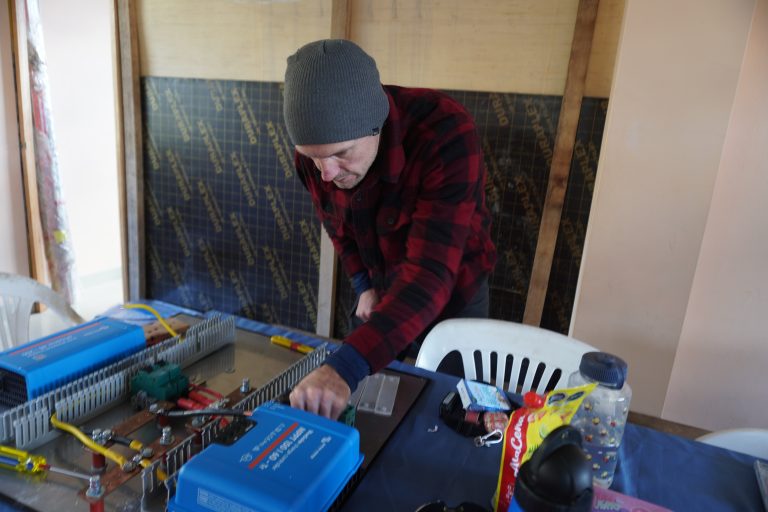
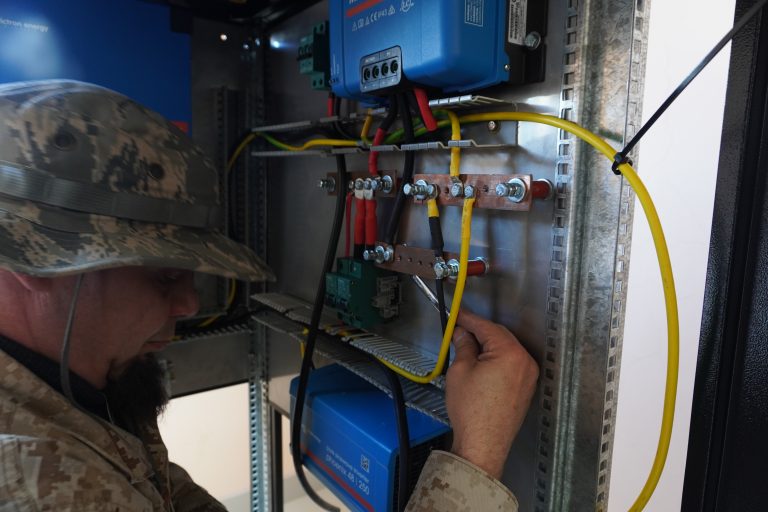
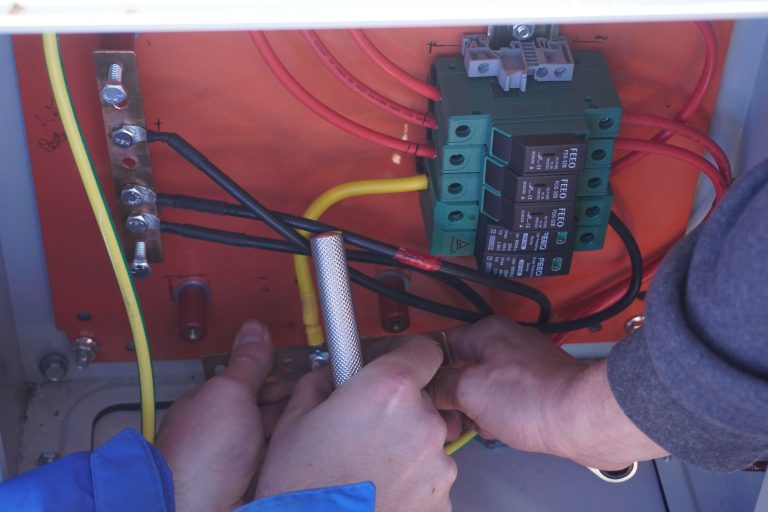
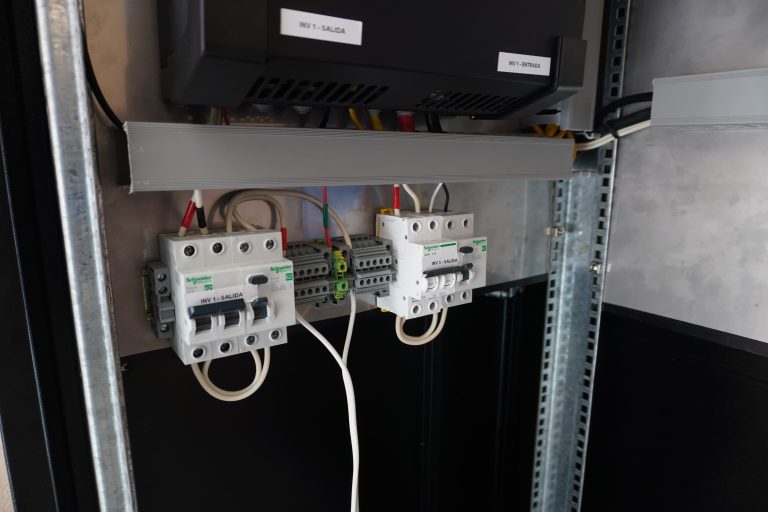
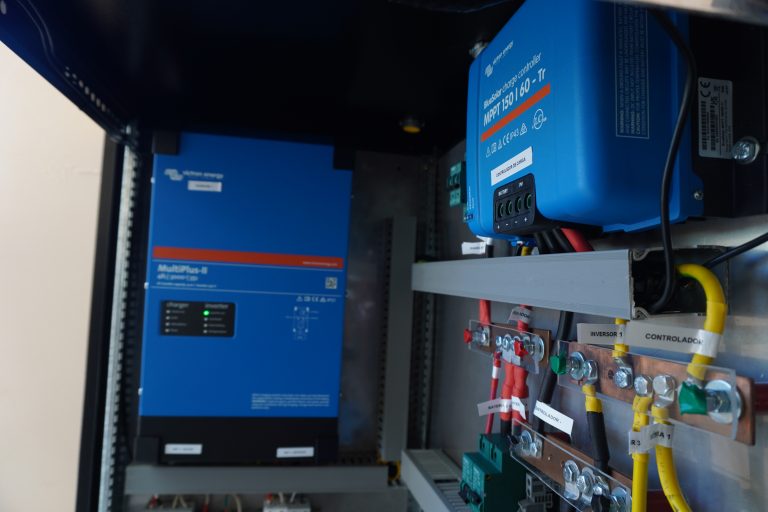
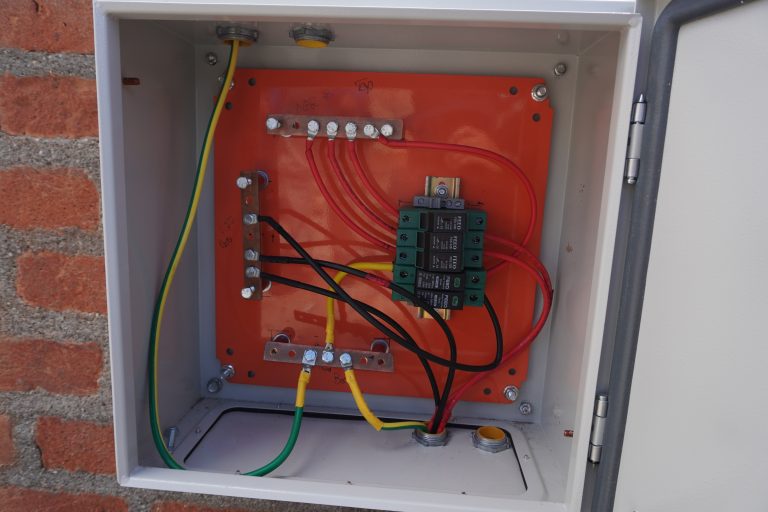
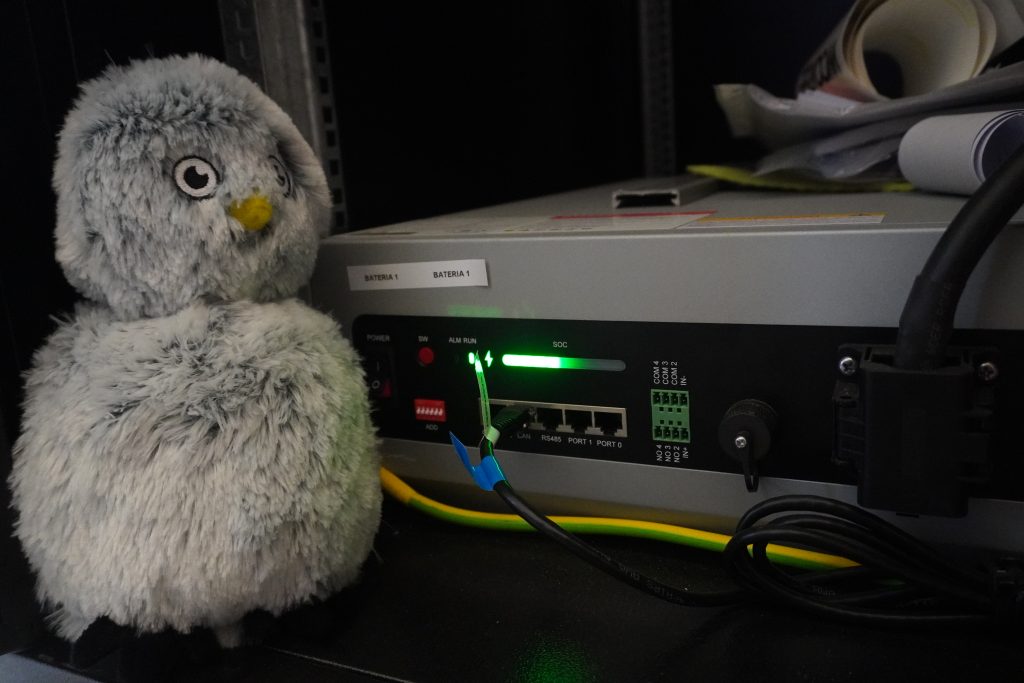
The individual equipment that make up the photovoltaic system were each carefully selected taking into account: overall quality, brand reputation, warranty, local replaceability, cost, maintenance considerations, and future expansion capability. The system includes two 5kWh Lithium Iron Phosphate (LFP) batteries that are UL listed and rated for over 15 years of calendar life with a 10 year warranty. Each battery also comes complete with several safety protection features and two battery management systems (one operational and one redundant). The battery management system communicates directly with the charge controller to indicate exactly how it is to be charged given mainly temperature and battery state of charge. The battery communicates this information along with 15 other pieces of information to the monitoring equipment for LUTW to ensure that it continues to work properly.
Integrated satellite internet system details
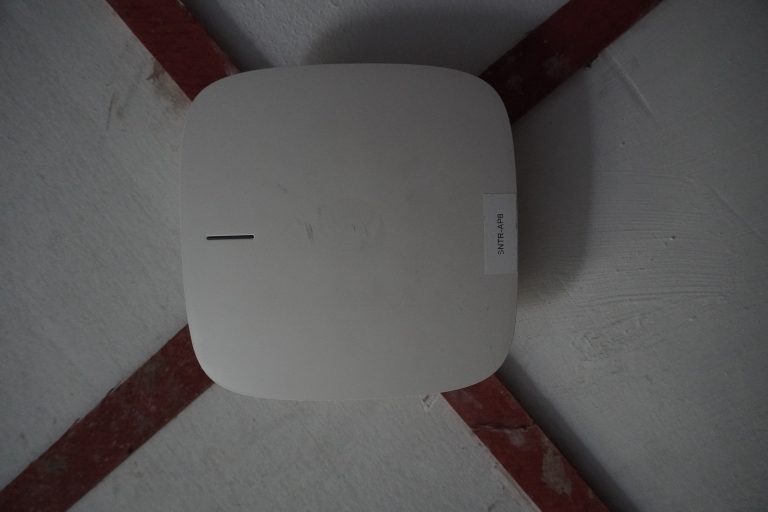
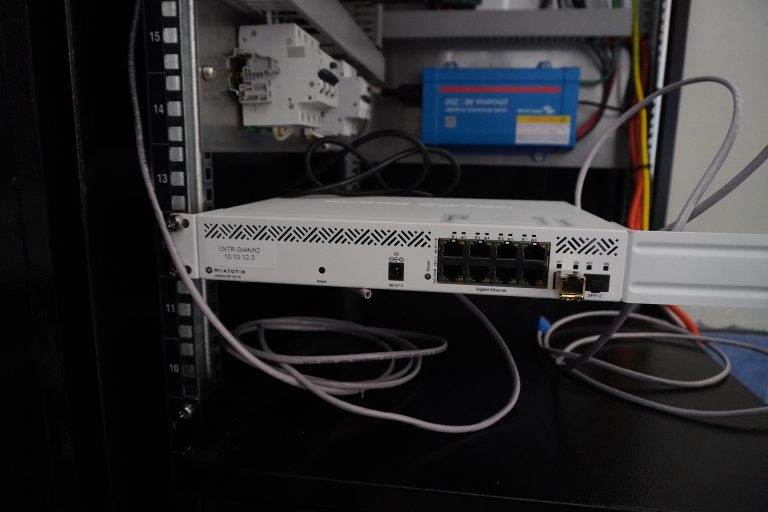
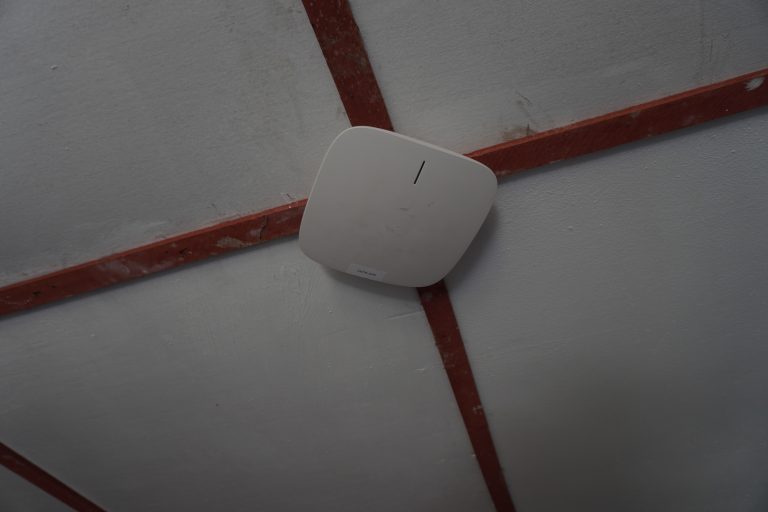
The installed satellite internet system was designed specifically for the community of Santa Rosa to provide internet to the health clinic, community center, and elementary school. Satellite internet service is provided through Starlink and distributed to 7 access points where the community can connect to a variety of networks based on their location. Signal is sent wirelessly by an antenna to the health clinic (~300m away), and distributed through a wired connection throughout the community center and elementary school. This allows for community members, teachers, students, and health professionals to connect to high speed internet inside the buildings and within a ~30m radius outside of the elementary school.
The system includes networks for different users: community members, students, teachers, health professionals, and an innovative voucher system developed by the wireless technology program at NAIT. The voucher system allows the community to sell internet access and/or share the cost of the monthly payment amongst themselves. In this case the community of Santa Rosa will receive the support from the local municipality to pay the monthly internet backend connection and therefore they will charge outsiders a small fee that will go into a community fund to be used for activities throughout the year. If however, payments from the municipality are discontinued they are able to evenly distribute the monthly cost between only 12 community members by using previously generated codes to distribute access and keep track of time online. This increases the sustainability of the internet system and provides an economic benefit to the community. The system is fully supported by LUTW through an online platform and VPN where all wireless equipment can be accessed and configured remotely.
Life changes begin in rural communities
Through the integrated internet/photovoltaic system LUTW is able to achieve reliable and sustainable electricity and internet access for the community of Santa Rosa. Early usage data shows consistent daily internet and energy consumption with one community member taking full advantage of the system to further his personal online software business while working remotely in the community with his family. Dalton Soto is using the internet to work remotely and still be close to his family to help out with managing their livestock. He has several clients for whom he creates websites for and works on mobile apps all in the community of Santa Rosa. He says the system has changed his life and has allowed him to work and be with his family, something that has not been possible in the past due to the lack of energy and internet in the community.
Volunteer Experience
LUTW projects give volunteers a unique opportunity to experience energy poverty first hand and change a remote community forever with an integrated internet and solar photovoltaic system. In this case, NAIT students worked together as a team, problem solved, and gained experience installing a sustainable system capable of providing off-grid community buildings with energy and internet that will last 20+ years. The students got to travel deep into the Peruvian Andes mountains, appreciate incredible views, camp and live in a remote community, and immerse themselves in true Inka culture. Participants reflect on the experience as a life changing and something that they are very proud of and will never forget.

During the Installation
NAIT students got hands-on experience installing solar modules, off-grid solar inverters, lithium-ion batteries, charge controllers, and an integrated internet system. The team split into 4 groups: the solar panel team, the electrical box team, the cabling team, and the internet team whom installed the system in 6 days. The system serves the community center, the elementary school, and brings internet to the health clinic. The students used theoretical knowledge that they learned in the classroom and through previous work experience to install the system to a high standard ensuring the system will last for decades into the future.
Intercultural Competence
Volunteers immerse themselves in the culture of the Andean people throughout the duration of the project. They discover what life is like in rural areas and participate in community activities such as local markets, traditional celebrations, eating and cooking traditional food, and observe animal management. In Santa Rosa de Santa Ana (like many areas of the Andes mountains of Peru) community members raise alpacas to then harvest their wool and also eat. Students observed how the community took advantage of all parts of the alpaca leaving very little waste. It is common for community members to manage over 50 alpacas, a select few have even amassed more than 100. Through this experience, students gain intercultural competence through experiencing local customs and learning first-hand about local values and beliefs. By engaging directly with the community they develop empathy for the community and gratitude by having the chance to better the community through a LUTW project.
Solving challenges
Working in a remote area brings many challenges such as equipment limitations, energy and communication scarcity, time constraints, and weather conditions. Volunteers must work together as a team to complete the project on-time to handover the system to the community on the last day. During this process in Santa Rosa, students showed resilience, resourcefulness, and adaptability as they overcome the challenges that a typical project will throw their way. They learn how to manage their time on the project site by balancing the tasks that must be completed by their group for the day with the quality that is expected by LUTW and the community to ensure the system functions properly in the long term.
Getting to know cultures: Exchange of experiences
Working on a remote project requires volunteers to demonstrate resilience, resourcefulness, and adaptability as they overcome challenges and work together to complete the project on-time and to a high standard. Through their project experience, volunteers immerse themselves in Andean culture, participating in local activities and learning about customs and values, which helps them develop intercultural competence, empathy, and a greater appreciation for the community they are serving. In Santa Rosa, NAIT students gained hands-on experience by working in teams to install a solar-powered energy system that brought internet access to a rural community’s health clinic, school, and community center in just six days. LUTW projects offer volunteers and students a life-changing experience, where they work together to install sustainable energy and internet systems in remote communities, while immersing themselves in local culture and create lasting change in one particular community forever.