LUTW: Pioneering in affordable LED lighting and social energy projects
The Vision Begins: 1997
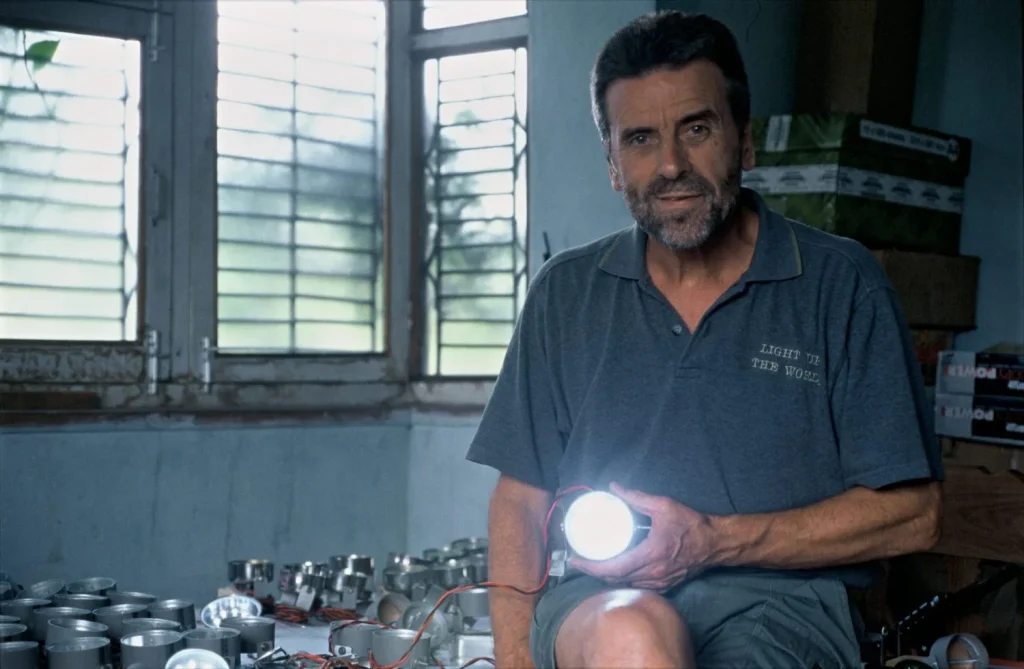
In 1997, Dr. Dave Irvine-Halliday, a Professor of Electrical Engineering at the University of Calgary, had the vision to use LED lighting to bring practical, economical, and environmentally safe lighting to the developing world.
While on sabbatical in Nepal, Dave visited local villages and was struck by the poor conditions that people lived in. Most of them were relying on kerosene lamps which produced little light and filled the homes with dangerous, toxic smoke.
As the annual income of the Nepalese villagers averaged $200 USD, Dr. Irvine-Halliday realized that there was a great need for simple, safe, healthy, affordable and rugged lighting.
Dr. Dave Irvine Halliday, Founder and Director Emeritus
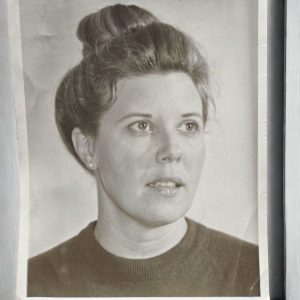
Jenny Irvine-Halliday– Co-Founder
LUTW wouldn't have been possible without Jenny.
A true pioneer, Jennifer “Jenny” Irvine-Halliday co-founded LUTW alongside her husband, Dr. Dave, in 1997, creating the first organization in the world to bring LED lighting to developing countries. Jenny was the catalyst that helped LUTW grow into what it is today; she discovered the Rolex Award for Enterprise, encouraged Dr. Dave to apply, and that recognition gave the organization the early visibility, credibility, and funding it needed to grow.
Her commitment, creativity, and passion for helping others took her across the globe, bringing light to countless communities. She believed deeply in the power of education, often reminding those around her: “Education is everything.” Jenny’s legacy lives on in every home, clinic, and school illuminated by LUTW.
From Spark to Structure: Establishing LUTW as a Global NGO
Ken played a pivotal role in transforming LUTW from an informal initiative into a fully incorporated NGO. He established the organization’s legal and operational framework, secured its first major funding, and led early award-winning projects that brought international recognition.
His Master’s thesis laid the foundation for LUTW’s scalable community-based model, ensuring that projects could be replicated and sustained across the globe. Together with Dave, his leadership helped shape LUTW into a global leader in energy access.
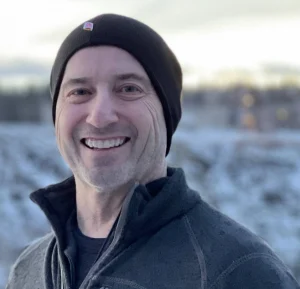
Ken Robertson – Co-Founder and Founding Operations Lead
Early Innovations and Global Recognition
Together with Roy Moore, Pauline Cummings, and several other early supporters who would become the founding board, LUTW evolved rapidly. In 2002, the organization was officially registered as a charitable foundation.
LUTW’s early innovations included:
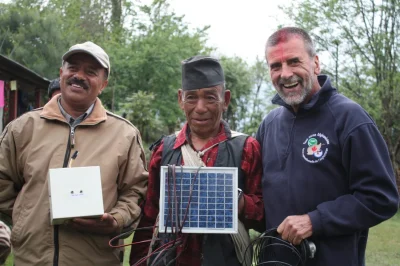
The world’s first “light in a box” solid-state solar-powered lighting system.
The first solid-state medical theatre lighting in the developing world (Bagdogra, India).
LED lighting for remote communities, including Sri Lanka and the Annapurna Base Camp.
As the organization grew, it earned global recognition through prestigious awards such as the Rolex Award, Tech Museum Award, and Saatchi & Saatchi Award for World-Changing Ideas. LUTW was also profiled in major publications including Reader’s Digest and National Geographic.
Pioneering in affordable LED lighting
In his career, Dave had been working with LEDs for more than two decades, and spent most of 1997 and 1998 trying to make an acceptable white light from various combinations of colored indicator LEDs. He made white light, but it was simply not bright enough to be of any practical use in the developing world. Soon he discovered that Nichia, a Japanese company, had invented a bright White LED a few years earlier and Dave immediately requested samples. The ‘eureka’ moment occurred in 1998 when Dave powered up his first White Light Emitting Diode and discovered that it provided more than enough light for a child to study with, at a minimal energy cost, and at a price affordable to the rural poor.
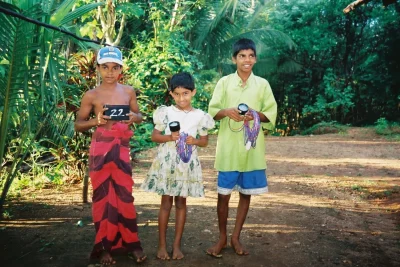
LED Lights distributed in Sri Lanka in 2004
The begining of Light Up The World
In the early years, Dave and his wife, Jenny, self-funded LUTW as a family project and built solar and LED systems – including one that illuminated a chess game at Annapurna Base Camp in 1999. In 2000 Thulo Pokhara, Nepal, was the first village in the world to be illuminated by LED lighting and solar energy, powered by Pedal Generators, and LUTW designed and built the first LED headlamp to be used on Mount Everest in the same year. In 2001, LUTW provided the first solid state medical theatre lighting in the developing world in Bagdogra, India, and villages in Sri Lanka were also illuminated.
Ken Robertson became LUTW’s first Executive Director and under his direction created the NGO, Light Up The World, formally established in 2002.
LUTW's first logo in 2002
In 2002, Ken led the formal development of LUTW’s governance, infrastructure, and operations, building on his earlier work to establish the organization’s mission and model. He also spearheaded the research and development behind LUTW’s first major innovation: a compact, ultra-efficient solar-powered LED system known as the “light in a box.” This breakthrough provided rural communities with reliable, low-cost lighting and became the foundation for LUTW’s scalable energy access programs.
The combination of Dave’s vision and Ken’s development management resulted in LUTW earning international acclaim for its innovative use of appropriate technology in international development. LUTW has received numerous prestigious awards, including: Rolex, Tech Museum, and Saatchi & Saatchi, and has been profiled in scientific articles, journals and popular publications such as Readers Digest and National Geographic.
Using partnership models developed by Ken, LUTW trained, outfitted and mentored on-the ground indigenous organizations to develop solid-state lighting and renewable energy programs within their operations.
Innovation and integration were the hallmarks of this approach. Local organizations adopted LUTW’s mandate but applied many of their own locally derived methods of enterprise development, project management and micro-finance. By empowering Indigenous groups to lead their own clean-energy initiatives, LUTW—recognized as a leading solar charity in Canada—has been able to extend its reach exponentially while strengthening the long-term capacity of communities to develop and manage their own programs.
Through generous support from interested individuals, corporations, host country organizations, international foundations and industrial partners, LUTW has brought light to homes in 54 countries around the world from Afghanistan to Zambia.
Over a million people have benefited from Light Up The World projects in 54 countries before 2012
Dave and his wife Jenny started a social enterprise in 2009 called Visionary Lighting and Energy India (VLE) designs. VLE develops and manufactures renewable energy systems, primarily for the developing world. In 2020 Dave rejoined LUTW’s Board and was appointed Director Emeritus and Light Up the World continues delivering social projects to bring life-changing technologies to developing communities around the world.
Dr. Dave in Nepal 2009
Today: LUTW established in Peru with Community Projects and Social Enterprise
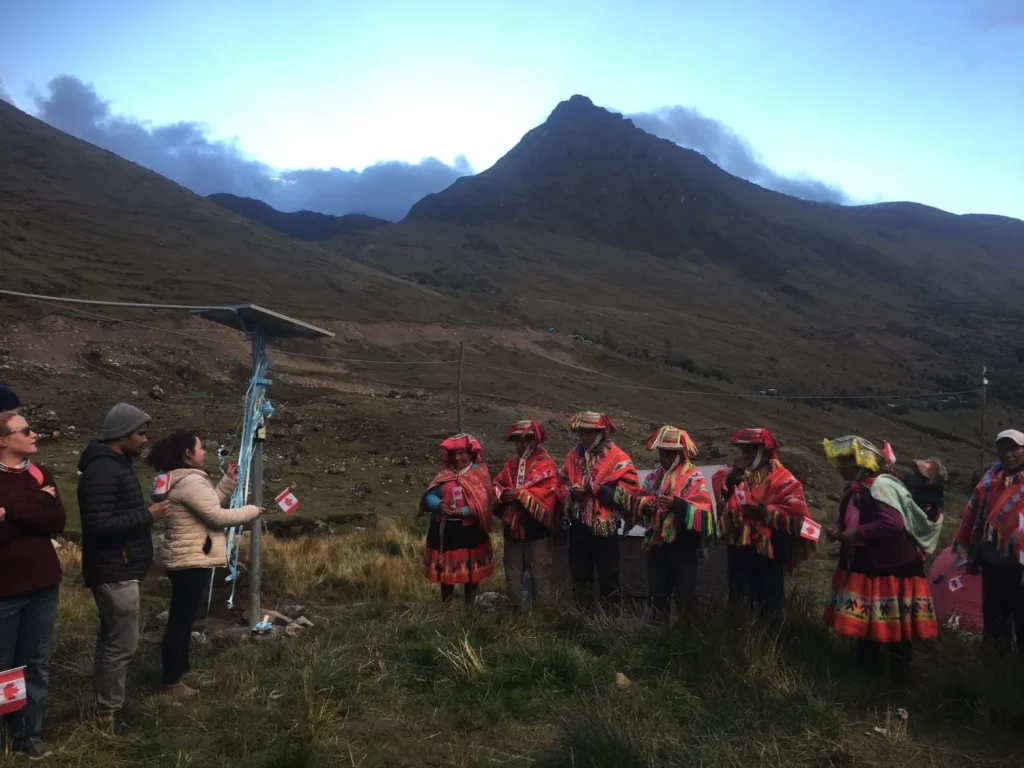
In 2010, LUTW established a field office in Peru and continue doing electrification projects in other Latin American countries. Peru is one of the countries in Latin America with the most people living off-grid due to the difficulty to reach the scattered populations in the rough terrains of the Andes and the Amazon.
LUTW started working in Peru supplying the technical and logistic expertise to foster collaborations between corporations and academic partners with communities and local governments. We have always have the philosophy to hire and train local people and beneficiaries for the projects so they can maintain the systems and guarantee the sustainability of the operations.
With the help of our partners from Enbridge, TransAlta, Wooree, NAIT, Texas Tech University, NAIT, SAIT, Skyfire energy, Algonquin College, Capital Power, Rundle College and more than 350 international volunteers, we have completed 77 projects electrifying schools, homes, clinics, agricultural and community buildings with solar energy.
Sign up for our email updates!
Our email updates and quarterly newsletters are the best way to stay in touch with our recent projects and campaigns. Sign up today!